State-private partnership seen as attractive for startups
Sophie Bu says the State and the private sector working together makes China an increasingly attractive place to start a business, particularly in the technology sector.
The 31-year-old, who has just returned from the United States where she studied for an MBA at Stanford University, is a partner in Shannon.AI, a Beijing-based technology startup.
"There is a whole ecosystem of the government and the market in China working together," she says.
"Government officials and others might not have specific knowledge of concepts such as artificial intelligence, but they are willing to embrace new ideas and enable the technology to develop."
 |
|
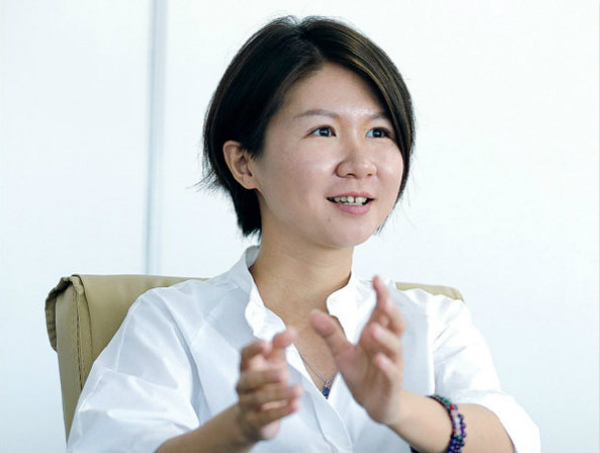
Sophie Bu, a partner in Shannon.AI, a Beijing-based technology startup. Wang Zhuangfei / China Daily |
Her company, which is based in the Zhongguancun area of Beijing, which is often described as China's answer to Silicon Valley, was founded in December by Li Jiwei, 29, who also returned from Stanford; Shen Shenjie, 30, who previously worked for a hedge fund in London; and He Haojie, 28. Bu joined in May.
The company, which employs 80, of which a third are returnees, uses artificial intelligence to deliver financial information to clients.
Bu, who originally graduated from Harbin Institute of Technology in interactive media and who spent four years in Africa - in Kenya and Ethiopia - working on development initiatives before going to Stanford, says the government has placed a lot of emphasis on fostering a startup culture in China.
"This extends to all the different provinces. There is financial support available, incubator facilities and various competitions you can enter," she says.
Shannon.AI secured initial venture capital funding of $3 million (2.6 million euros; £2.3 million) and raised $18 million in a second round of funding at the end of September.
"If you go back 10 years, there were not a lot of VCs in China and nobody had heard of (business) angel investors, but now it is very active," she says.
"Now the market is very fast-moving. There are few places in the world where you can build a new business and it becomes viable in a short space of time. There is a huge market here, and it is easy to test business ideas here."
Jeffrey Towson, managing partner of investment and advisory company Towson Capital and a professor of investment at Peking University's Guanghua School of Management, says China now has a stronger entrepreneurial culture than the US.
"It is the ferocity of competition that is striking. Silicon Valley seems slow and sleepy compared to digital China," he says.
"Venture capitalists all say that Chinese startups are more resilient. They also do not tend to die. If it doesn't work out, they turn off the heat in the office and try to turn things round."
Li at Shannon.AI, who has a doctorate in computer science from Stanford, says the dynamism of China's technology sector is beginning to worry the US. According to a recent Financial Times report, US President Donald Trump was urged by a senior immigration adviser to stop issuing visas for Chinese students to study in the US.
"There is a perceived threat that Chinese talent entering the United States will be bringing American secrets back to China," he says.
"I have studied in the US and have many American friends. When I recently applied for a visa, I found that it was checked (referred) instead of being routinely issued, which was very unusual. Others, I know, have had similar experiences recently."
Li says it would be better if there was collaboration between China, the US and across the world in new technology sectors.
"Most people in this sector attend conferences around the world where they share ideas. In an area like artificial intelligence, however, it would be real hard to cut China out even if you wanted to."
Bu, meanwhile, says the Chinese technology sector continues to thrive through a mix of State direction with national strategies such as Made in China 2025 and the dynamism of the scientific and technological community.
"These national strategies, combined with a vibrant private sector, are a very effective combination," she says.