

Huzhou's Anji turns natural resources into sustainable growth
In July, Anji county in Huzhou, East China's Zhejiang province is full of lush bamboo forests and lively streams.
In Tongshan village in Meixi town, the Yinjiang Valley Waterfall Rafting site is bustling with tourists. This 2.5-kilometer gorge ride, featuring a 120-meter natural drop, four waterfalls, and 16 slides, offers thrilling views and experiences.
Previously reliant on forest leasing, Tongshan village has invested ecological resources into the rafting project, securing annual profits through an innovative model that combines with village-enterprise cooperation and ecological product trading. The site's opening has also boosted local tourism businesses.
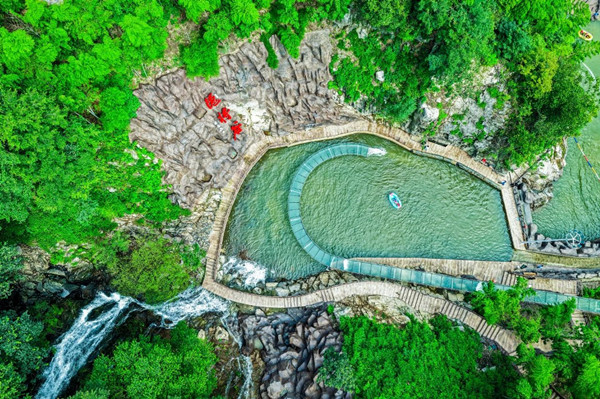
The Yinjiang Valley Waterfall Rafting site in Anji county offers thrilling views and experiences. [Photo/WeChat account: anjifb]
Anji is taking the lead in transforming ecological value, pioneering the water ecological product value transformation model and launching a county-level geological ecological product directory. The regional brand Anji White Tea, for one, has ranked among China's top 10 for 16 years.
Tourism activities like sports, cultural heritage, and night tours are thriving.
In Xiaofeng town's Xinan village, the Freeland Nature Park operated by entrepreneur Wang Lijun, who purchased the operating rights of a 1.5-kilometer-long stream for 3.4 million yuan ($473,976), offers different fun activities and draws 1,000 visitors daily.
Anji's green development path has turned natural resources into sustainable growth, promoting the development of bamboo products as a substitute for plastic products and integrating eco-friendly practices into urban and rural life.


