

Huzhou creates green homeland for Anji's salamanders
At dawn, Xie Haitian sets out on his daily patrol from the Dongguangang Protection Station, climbing stone steps to reach the Qianmutian marsh wetland nestling 1,350 meters above sea level on Longwang Mountain in Anji county, Huzhou, East China's Zhejiang province.
The wetland, part of the Hynobius Amjiensis National Nature Reserve, is home to the Anji salamander, also known as Hynobius amjiensis — a critically endangered species of salamander endemic to Zhejiang.
Discovered in the 1990s, the Anji salamander resembles a gecko with smooth skin similar to a loach. Its survival hinges on a pristine habitat, making it extremely rare.
Xie, a forest ranger, is part of the Anji salamander protection team, which patrols the reserve twice daily — ensuring the delicate ecosystem remains undisturbed by wildlife or tourists.
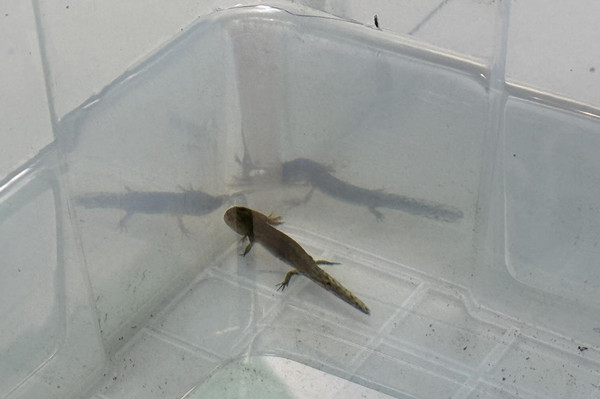
A juvenile Anji salamander. [Photo/Tide News]
The salamander's habitat is shrinking due to invasive shrubs, prompting the reserve to enhance protection efforts and collaborate with research institutions for habitat monitoring. A comprehensive ecological restoration plan is underway, informed by extensive data collection.
Beyond fieldwork, the reserve has created an "artificial home" for the salamanders to address challenges like cannibalism among young salamanders. This facility, featuring simulated natural environments, has improved survival rates to over 70 percent.
The ecological benefits extend beyond conservation, revitalizing the local economies. Villages at the mountain's base thrive with tourism, driven by the area's natural beauty and biodiversity.
This very harmony between ecological preservation and economic growth reflects a sustainable future for Anji county.


