

Promoting the Integrated Development of Education, Science and Technology, and Human Resources


- Share


The Recommendations of the Central Committee of the Communist Party of China for Formulating the 15th Five-Year Plan for National Economic and Social Development (hereinafter referred to as the “Recommendations”), adopted at the fourth plenary session of the 20th Central Committee of the Communist Party of China (CPC) on October 23, 2025, places Chinese modernization at the forefront of national priorities, offering a deep understanding of evolving domestic and international landscapes and the pressing need for high-quality economic and social development. The Recommendations lays out a systematic plan for the integrated development of education, science and technology, and human resources, providing a clear direction and fundamental guidance for work in these areas during the 15th Five-Year Plan period (2026-2030) and beyond.
I. Significance of pursuing the integrated development of education, science and technology, and human resources
Education forms the foundation for building a modern socialist country; science and technology serve as the primary driving force; and human resources provide essential support. The Report to the 20th CPC National Congress in 2022 was the first to dedicate an entire chapter to work related to education, science and technology, and human resources. In 2024, the third plenary session of the 20th CPC Central Committee then laid out coordinated reforms to the institutional mechanisms governing these three areas, and the fourth plenary session most recently established systematic arrangements for their integrated development. This progression demonstrates the high priority the CPC Central Committee with Xi Jinping at its core assigns to this work and reflects a deepening understanding of the laws underlying educational development, scientific and technological innovation, and talent cultivation. Promoting integration among education, science and technology, and human resources holds profound historic and practical significance. It is essential for accelerating the building of a strong country in these three areas and for underpinning Chinese modernization through the modernization of science and technology.
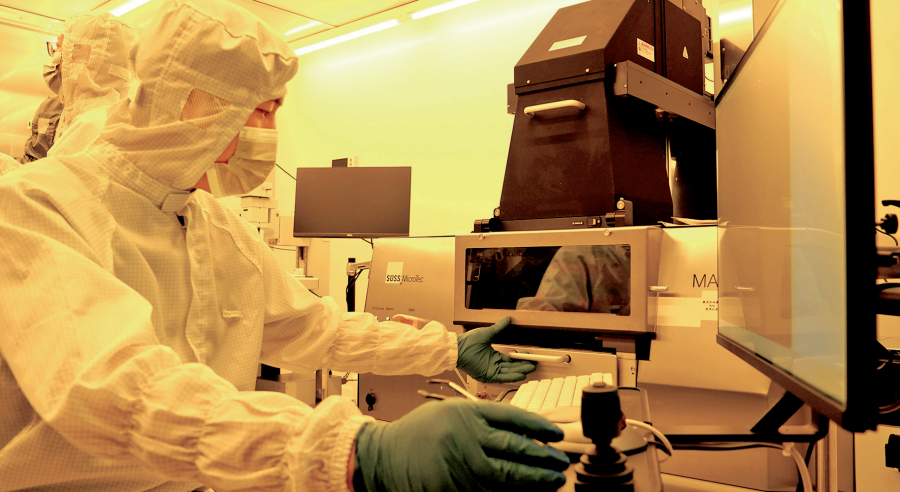
Researchers work in a micro and nano processing laboratory at the Center for Excellence in Brain Science and Intelligence Technology, Chinese Academy of Sciences, June 3, 2025. Recently, the center joined forces with Huashan Hospital, affiliated with Fudan University, and related enterprises to conduct prospective clinical trials of invasive brain-computer interface (BCI) devices. This has positioned China as the second country, after the United States, to advance invasive BCI technology to the clinical trial stage. PHOTO BY XINHUA REPORTER FANG ZHE
A fundamental path to Chinese modernization
As President Xi Jinping has emphasized: “Education, science and technology, and human resources are the foundational and strategic pillars for building a modern socialist country.” Historical experience shows that every country that has successfully modernized since the modern era—such as the United Kingdom, France, Germany, and the United States—without exception did so on the basis of robust education systems, technological progress, and human resources development. For China to accomplish in just a few decades what took many Western developed countries centuries requires overcoming major challenges, including the pressures of industrial transformation and upgrading as well as constraints related to energy, resources, and environment. This calls for a fundamental shift in our traditional development model and talent cultivation approach. We must increasingly rely on high-level scientific and technological innovation and a high-caliber talent pool to achieve a thorough transformation in both the drivers of development and the development path itself, charting a distinctive path to Chinese modernization. Therefore, as we embark on the new journey of building a modern socialist country, we should redouble efforts to promote the integrated development of education, science and technology, and human resources and enhance synergy and coordination among the three, in order to provide robust support for Chinese modernization.
An essential requirement for meeting the challenges of global competition
President Xi has observed that “competition in today's world is essentially competition in talent and education,” and that “high technologies have become the front line and main battlefield of international competition.” As global changes of a magnitude unseen in a century continue to accelerate, the international competitive landscape is undergoing profound transformation, with major nations contesting technological leadership and elite talent. China has joined the ranks of the world's innovators with the world's largest higher education system and science and technology workforce. Yet substantial gaps remain: China's capacity for scientific and technological innovation needs further strengthening, top-tier talent remains limited, and talent development structures are not yet fully aligned with innovation needs. To transform from being relatively strong to leading in education, science and technology, and human resources over the next decade, China must sharpen its understanding of global competition and domestic development priorities and closely link high-level scientific and technological self-reliance with independent cultivation of top talent to secure strategic initiative.
An inevitable choice for China to capitalize on the new scientific and industrial revolution
President Xi has warned: “Looking ahead, the new scientific and technological revolution and industrial transformation will be among the hardest factors to control, yet impossible to avoid. Seize it and it becomes an opportunity; miss it and it becomes a threat.” As this new wave of scientific and industrial revolution gathers momentum, scientific research is approaching both cosmic and subatomic scales, pushing into extreme conditions, and increasingly bridging multiple disciplines. Breakthroughs in areas such as artificial intelligence and quantum science are fundamentally reshaping the way research is conducted and how education is delivered. Traditional teaching models can barely keep pace with the explosive growth of knowledge and emerging technologies. At the same time, the knowledge base and capabilities of today's talent pool fall short of what scientific research and industrial innovation require. China must therefore integrate education, teaching, and talent development with frontier scientific and technological innovation. The entire process, from knowledge discovery and updating to teaching and application, must be accelerated, while more scientific and technological leaders and key specialists must be nurtured. This coordinated approach is essential for attaining technological superiority and continuously generating new quality productive forces.
II. Internal logic and overall requirements for the integrated development of education, science and technology, and human resources
President Xi has emphasized that “innovation relies on talent, and the training of talent relies on education. Therefore, these three undertakings are inherently consistent and reinforce each other.” He has also stressed that “strategies for building China into a powerhouse of education, science and technology, and talent are consistent and complementary. We must advance them in an integrated and coordinated manner to promote a multiplier effect in high-quality development.” These insights reveal the fundamental logic and natural principles by which education, science and technology, and human resources development support and strengthen one another. To implement the Recommendations, we must embed these principles into every dimension of educational development, scientific and technological innovation, and talent cultivation, giving priority to education as the foundation for scientific innovation and talent development, utilizing scientific and technological self-reliance to guide the direction of education and talent training, and leveraging human resources to guide, drive, and energize both education and scientific innovation.
We should promote integrated strategic planning
Strategic planning provides a roadmap for the integrated advancement of education, science and technology, and human resources, playing a vital role in setting the strategic direction for this endeavor. Since the founding of the People’s Republic of China in 1949, the commitment to strategic planning, emphasizing a forward-looking vision, systematic organization, and sustained progress, has been a major reason for the historic achievements and transformations in education, science and technology, and human resources. We must now pursue the strategic goal of becoming a leading country in education, science and technology, and human resources by 2035. This requires situating the development of education, scientific innovation, and talent cultivation within Chinese modernization, aligning strategic goals, coordinating tasks and measures, and synchronizing support mechanisms to strengthen systematic, holistic, and synergistic planning.
We should promote integrated implementation of key tasks
Effectively implementing key tasks is crucial for turning the strategic vision of integrated education, science and technology, and human resources development into tangible results. Because the three domains are interdependent and mutually reinforcing, the key tasks in these areas are also naturally intertwined and inseparable. Therefore, we must strengthen how we design and carry out these tasks in an integrated manner, giving equal weight to achieving results and nurturing talent. This means closely aligning academic discipline adjustments with research and workforce strategies, integrating student recruitment and education with scientific breakthroughs and talent pipelines, and fostering coordinated progress across education, science and technology, and human resources.
We should promote holistic planning in capacity building
Research and education infrastructure and shared platforms provide the material and technical foundation for education, scientific innovation, and talent development. In practice, they serve highly overlapping user communities and support interchangeable applications, giving them the characteristics of public goods. We must improve how we coordinate the planning and development of such facilities and platforms, encouraging the joint construction and shared use of research instruments, public platforms, and living facilities. We should also enhance their educational role by enabling more young students to participate early on in scientific innovation through these platforms. By taking part in platform development and upgrades, building instruments and equipment independently, and contributing to ongoing data collection, students develop both an exploratory spirit and practical skills through hands-on experience.
We should promote integrated coordination of policy support
Strong policy support is essential for the integrated development of education, science and technology, and human resources. As objectives overlap, tools are interconnected, and policy outcomes influence one another, policy design and implementation must avoid fragmentation and inconsistency. It is essential that we strengthen alignment across instruments for discipline development, enrollment and employment, scientific evaluation, awards and recognition, and talent programs. These instruments should be continuously adjusted and refined in response to evolving scientific trends and economic and social needs. This approach ensures all policies share consistent goals, strategies, and implementation paths, forming a unified policy framework that drives the integrated development across education, science and technology, and human resources.
III. Key tasks for the integrated development of education, science and technology, and human resources
The Recommendations makes establishing “a basic framework for the integrated development of education, science and technology, and human resources” a key objective of the 15th Five-Year Plan. It sets out systematic plans and clear requirements to coordinate efforts to build national strength in these fields and to accelerate the development of globally influential centers. We must fully implement the CPC Central Committee's directives by prioritizing educational development, achieving self-reliance in science and technology, and utilizing human resources to drive growth. All tasks and measures that promote the integration among these three areas should be carried out comprehensively.
First, we should strengthen organizational leadership and coordination
We must uphold and strengthen the CPC's overall leadership over education, science and technology, and human resources. We should also establish and refine cross-sector coordination mechanisms to ensure reforms, innovations, and development proceed coherently. This requires stronger top-level design, effective coordination, comprehensive implementation, and rigorous oversight in strategic planning, policy formulation, resource allocation, and evaluation frameworks. We should improve the alignment and compatibility of policy objectives, instruments, intensity, and cycles across education, science and technology, and human resources, so as to foster positive interplay between indigenous technological innovation and the training of homegrown talent.
Second, we should align talent development with technological innovation, industrial growth, and national strategic priorities
We must establish and refine mechanisms to adjust academic disciplines and training models in response to technological advances and national strategic needs. This requires reinforcing faculty, textbooks, curricula, and training programs accordingly. We should prioritize cutting-edge basic science, breakthroughs in core technologies in key fields, and the demands of emerging industries and industries of the future. We must advance the construction of national interdisciplinary centers and reinforce basic disciplines, emerging disciplines, and interdisciplinary subjects while cultivating urgently needed innovative talent. We should continue to develop world-class universities and disciplines and promote category-based reforms of higher education institutions while optimizing the regional distribution of higher education resources. The capacity of research institutions, innovation platforms, enterprises, and technology programs should be strengthened to attract and develop talent. By integrating science with education and industry with education, we can further meld teaching and learning together with major scientific initiatives and industrial innovation processes. We should explore new models for independently cultivating top innovative talent and promote AI-driven transformation in education to enable large-scale, personalized, and innovative instruction through digital tools.
Third, we should move faster to build a contingent of personnel with expertise of strategic importance to our country
To build world hubs for talent and innovation, we must vigorously cultivate more science strategists, develop large numbers of world-class scientific and technological leaders and innovation teams, train a substantial corps of exceptional young researchers, and expand the ranks of outstanding engineers, master craftsmen, and highly-skilled workers to form a large-scale, well-structured, high-quality workforce of innovators. We should encourage more leading scientists and engineers to engage in education and strengthen teachers, scientific literacy and mentors, pedagogical skills so that researchers teach and educators participate in frontline research. We must enhance talent collaboration and optimize the structure of the workforce by matching resources to regional development needs, manage orderly interregional talent flows, and promote balanced regional talent development.
Fourth, we should deepen the integrated reform of education, science and technology, and human resources systems
We must apply a holistic, systematic approach to address deep-seated, fundamental constraints on integration. It is essential that we fulfill our core mission of cultivating moral character and developing well-rounded individuals by strengthening comprehensive education that refines the capabilities of professionals via moral, intellectual, physical, aesthetic, and labor dimensions. We should strengthen the integration of science and the humanities to foster students, innovative thinking and practical creativity. We should deepen reform of project reviews, institution assessments, and talent evaluations to give greater weight to innovation capability, performance, outcomes, and contributions. We should establish differentiated evaluation systems and assessment mechanisms that align with educational research activities and talent development, fully stimulating the enthusiasm, initiative, and creativity of our science and education workforce. We should advance income distribution reform in universities and research institutions, building a compensation system that balances regulation and incentives, links pay to contribution, and ensures efficiency and fairness. We should expand talent exchange channels among universities, research institutions, and enterprises to invigorate innovation.
Fifth, we should further open up and strengthen international cooperation
We should enhance cross-departmental and cross-institutional collaboration, encouraging innovation actors from industries, universities, and research institutions to jointly undertake major projects, co-develop platforms and institutions, openly share resources, and collectively cultivate outstanding talent. This will allow supply and demand to be matched more precisely and help promote the smooth flow of essential factors and deeper integrated development. We must integrate more deeply into global innovation networks by leading and participating in international Big Science programs and projects. We should leverage major initiatives and platforms to strengthen international exchanges and cooperation in scientific research and talent cultivation. We must deepen international education cooperation by encouraging high-level foreign science and engineering universities to establish collaborative programs in China and by enhancing capacity for overseas education initiatives. We should establish an immigration system for highly-skilled talent and improve support mechanisms for recruiting overseas talent to attract global expertise to China's efforts to lead in education, science and technology, and human resources.
(Originally appeared in Qiushi Journal, Chinese edition, No. 22, 2025)