Tantou-style New Year pictures: Revitalization of ancient art


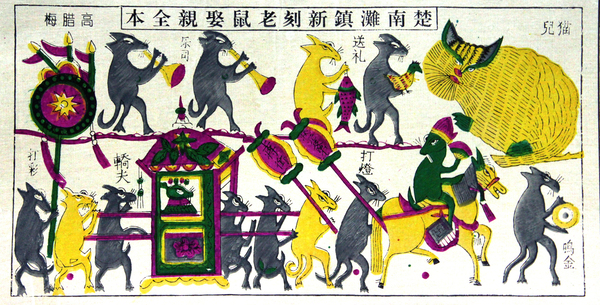
A folklore story is depicted in a Tantou-style New Year picture. [Photo provided to chinadaily.com.cn]
Tantou-style New Year pictures, originating in Tantou town, Longhui county, Shaoyang, a city in Central China's Hunan province, are renowned for their vibrant colors and exaggerated, imaginative designs.
Dating back to the late Ming Dynasty (1368-1644), Tantou-style New Year pictures are the only type of watermark wood prints in Hunan. With their vivid colors and distinctive southern Hunan style, they evoke festive memories of the Chinese New Year. In 2006, they were included in China's first national intangible cultural heritage list.
Creating the pictures is a complex process involving over twenty steps, including selecting materials, making the paper, applying a base coating, and carving the woodblock. Craftsmen use local Moso bamboo (Phyllostachys edulis) and lime to produce a unique pulp, which is then powdered to create the vibrant paper. The carving technique adds a relief effect, making each piece a one-of-a-kind artwork.
Today, Tantou-style New Year pictures have begun incorporating modern elements. Yin Dongxiang, a provincial inheritor, has introduced smaller-sized paintings and new products like calendar art and lanterns, appealing to younger audiences. Through her workshop, she is passing down the craft to a new generation, ensuring its continued growth.
No longer limited to traditional festivals, Tantou-style New Year pictures have become sought-after cultural products, attracting tourists, boosting the local economy, and ensuring this ancient art continues to live on.