Anhua thousand-liang tea


Anhua thousand-liang tea, hailing from Anhua county in Yiyang, a city in Central China's Hunan province, boasts a history spanning over 140 years.
Known as the "town of tea", Anhua's unique combination of rich soil and favorable climates makes it an ideal location for tea cultivation. As early as the Tang Dynasty (618-907), Anhua tea was prized as a tribute to the imperial court.
The origin of thousand-liang tea dates back to the late Qing Dynasty (1644-1911). Its name comes from the weight of a single log of tea: 1,000 liang, an ancient Chinese unit of measurement roughly equivalent to 36.25 kilograms.
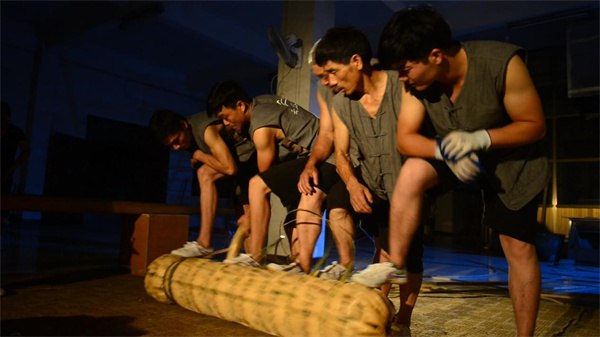
Workers press and shape thousand-liang tea. [Photo provided to chinadaily.com.cn]
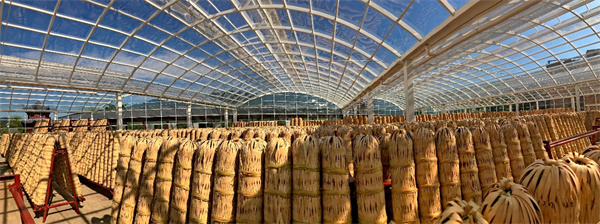
The drying area for Baishaxi thousand-liang tea. [Photo provided to chinadaily.com.cn]
The production of thousand-liang tea is a meticulous, entirely handcrafted process that unfolds in two main stages. First, loose black tea is created through processes like fixation, rolling, and piling. This is followed by the more refined steps of screening, blending, softening, compressing, and shaping. The tea logs are then sun-dried and exposed to dew for 55 days, allowing them to reach their full character.
Thousand-liang tea is celebrated for its sophisticated craftsmanship and is key to the region's social and economic lifestyle. Often referred to as a "living fossil" of Chinese tea culture, Anhua thousand-liang tea embodies the traditional methods and lifestyle of Meishan, the cultural heart of Anhua.
In recent years, Anhua black tea has emerged as a dominant industry. It has been recognized as part of China's second batch of national intangible cultural heritage items. The production technique of thousand-liang tea has also earned recognition as a UNESCO intangible cultural heritage item.