CBMI pioneers green infrastructure revolution in the Caribbean


For over two decades, CBMI Construction Co., Ltd., a flagship subsidiary of Sinoma International Engineering Co., Ltd. Which belongs Fortune Global 500 conglomerate China National Building Material Group Co., Ltd.(CNBM), has been redefining industrial modernization in the Caribbean through its groundbreaking partnership with Dominican Republic’s cement giant Colacem (Domicem). What began in 2002 as a bold cross-continental collaboration has since evolved into a blueprint for Sino-Caribbean cooperation, combining cutting-edge Chinese engineering with visionary sustainable development.
A legacy of engineering excellence
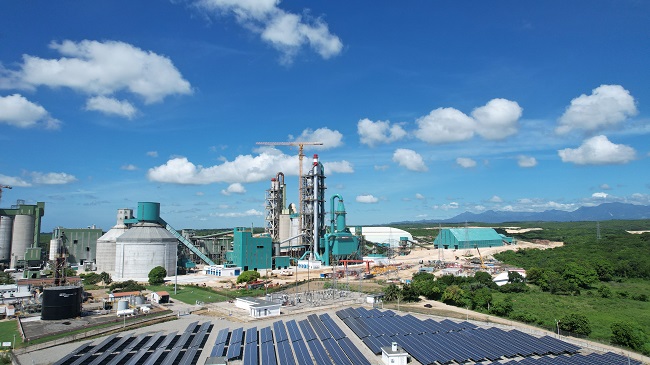
Marking its 66th anniversary this year, Sinoma CBMI has cemented its reputation as a global leader in integrated engineering solutions across cement production, renewable energy, environmental remediation, and smart infrastructure. The company's 2002 landmark achievement—the EPC turnkey delivery of the Caribbean's first 2,500 TPD clinker production line—not only established Dominican Republic as a regional cement powerhouse but demonstrated China's capacity to export world-class industrial ecosystems.
The project's resounding success (95 percent operational efficiency, 20 percent above-design capacity) became a springboard for global expansion. "This was more than a factory—it was a knowledge transfer revolution," recalls Domicem Chairman Francesca Colaiacovo. "Sinoma CBMI didn't just build infrastructure; they equipped us with future-proof technologies that still lead industry benchmarks."
Innovation redefined: The 2021 quantum leap
Building on this foundation, the 2021 inauguration of the 3,500 TPD brownfield expansion project showcased Sinoma CBMI's next-generation capabilities. Incorporating AI-driven 3D modeling, localized large-component manufacturing, and intelligent construction management, the project achieved a 15 percent faster commissioning timeline while reducing embodied carbon by 22 percent versus conventional methods.
The results speak volumes of combined annual capacity exceeding 3 million tons; thermal efficiency outperforming EU sustainability standards; and 30 percent reduction in per-ton power consumption.
This technological triumph propelled Colacem to become the Dominican Republic's undisputed cement leader while attracting regional partners like Cemento Panam, who subsequently entrusted Sinoma CBMI with a 1-million-ton/year grinding station contract.
The Santo Domingo innovation nexus
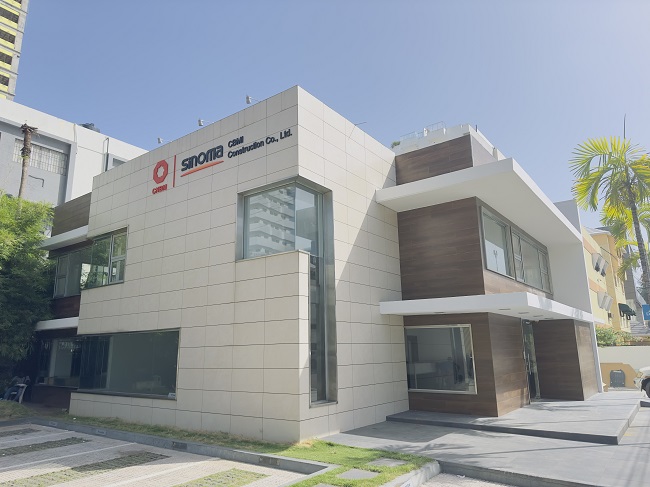
In 2024, Sinoma CBMI elevated its regional commitment by establishing an Advanced Engineering & Sustainability Hub in Santo Domingo. This state-of-the-art facility serves as central America's first remote operations center, regional headquarters for circular economy R&D, as well as the training academy certifying 500+ local engineers annually.
"The Hub isn't just about maintaining equipment—it's about co-creating the Caribbean's green industrial future," explains Sinoma CBMI General Manger Gao Xing. "From carbon capture systems to marine concrete innovations, we're developing solutions tailored to island economies' unique challenges."
Blueprint for net-zero partnership
Aligned with CNBM's "Materials for Life" vision, Sinoma CBMI is transitioning from a project contractor to a sustainable comprehensive solutions and green building materials provider. It makes the commitment to bring its carbonization engineering development and project references into the American region, including alternative fuels, calcined clay, solar power, waste heat recovery power generation, green mining, and CCUS.
In the short future, Sinoma CBMI shall build its own service basement and building material warehouse and manufacture facility, to support the mother group CNBM's oversea expansions.
Epilogue: building civilizations, bridging futures
From its pioneering Dominican project to its current portfolio spanning 60 countries, Sinoma CBMI's journey epitomizes China's evolving role in global infrastructure—where technological prowess meets ecological responsibility. As Caribbean nations accelerate their energy transitions, this partnership model offers a compelling template: one where shared innovation builds not just factories, but enduring legacies of progress.