
Heightened global economic volatility calls for vigilance against the "financialization" of food
2025-07-31The Trump administration recently announced the reimposition of steep tariffs on major trade partners including China and the European Union. The multilateral trade framework under the World Trade Organization (WTO) faces further marginalization, while export orders in many countries are in sharp decline. Simultaneously, risk aversion is surging in international financial markets, fueling a wave of pessimism across the global economy.
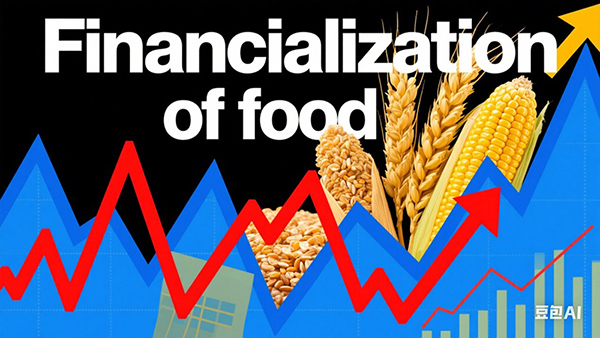
Historically, periods of economic turbulence have often triggered the financialization of food. In such scenarios, large volumes of speculative capital flood into futures and spot markets to seek profits, treating grain not as a staple good, but as a financial asset. The result is often severe price distortion, disconnected from supply and demand fundamentals.
Following the 2008 global financial crisis, capital retreated from high-risk sectors such as stocks and real estate and poured into commodity markets as a safe haven. As a basic necessity and strategic commodity, grain became a key target. The share of speculative capital in international agricultural futures markets surged from 30% in 2003 to 75% in 2008. That year, the trading volume of Chicago wheat futures reached 50 times the annual wheat output. The FAO Cereal Price Index rose by 156% between January 2006 and June 2008, far exceeding what could be explained by supply and demand fundamentals. Soaring food prices pushed an additional 40 million people into hunger in 2008, posing a serious threat to food security in developing countries. Similar trends were observed during the COVID-19 pandemic (2020–2022) and amid the Russia-Ukraine conflict.
There are several reasons why grain attracts capital during economic downturns:
First, grains are considered safe-haven assets. Unlike oil and metals, food demand is highly inelastic, and grain prices are relatively resistant to collapse, making them attractive to investors in turbulent times. Studies have shown a significant negative correlation between agricultural futures prices (such as corn and wheat) and global panic indices. For long-term investors, adding agricultural commodities to their portfolios can be an effective hedge against systemic risk.
Second, grains offer high accessibility for speculative trading. With the rise of financial innovation, exchanges such as the Chicago Mercantile Exchange (CME) have introduced a growing range of ETFs, futures, and options based on agricultural products. These developments have significantly lowered the barrier to entry and diversified trading tools, allowing financial capital without delivery capacity to flexibly participate in food markets. In February 2025, CME launched micro-futures contracts for five agricultural products, including wheat, corn, and soybeans. Within two months, trading volume in agricultural futures rose by 35%, making it the fastest-growing asset class on the exchange.
Third, grains have strategic value in price-setting power. As global economic volatility intensifies, control over food supply and pricing has become a geopolitical lever. By intervening in food markets, capital can hedge against inflation, exchange rate fluctuations, and supply chain shocks—while also gaining influence in the reconfiguration of international food pricing systems, thereby strengthening bargaining power in global competition.
To prevent another round of excessive volatility in grain markets due to financialization, coordinated action is needed across three dimensions:
1. Strengthen oversight and early warning systems for financial transactions in food markets.
Utilize big data and frontier technologies to monitor cross-border capital flows and build tiered international risk monitoring systems. Special attention should be paid to high-risk commodities such as corn and soybeans.
2. Enhance the linkage between spot and futures markets to mitigate systemic risk.
Develop integrated mechanisms for managing risk across both markets. Encourage spot market players to make effective use of hedging tools in futures markets to reduce the impact of price fluctuations on the real economy along the food supply chain.
3. Build a more resilient and diversified agricultural import system.
To respond to the tariff war initiated by the Trump administration and its broader trade pressures, China should deepen agricultural cooperation under the Belt and Road Initiative. This includes signing mutual recognition and tariff reduction agreements with more partner countries, and establishing overseas agricultural cooperation bases. Such steps can reduce dependence on raw materials from the US and other vulnerable markets, thereby enhancing the resilience and security of the domestic food system against speculative shocks in international financial markets.
Lijian, Huazhong Agricultural University
Copyright © China Daily. All Rights Reserved
京ICP备13028878号-36