Guyuan: China's green agricultural hub and ecological treasure


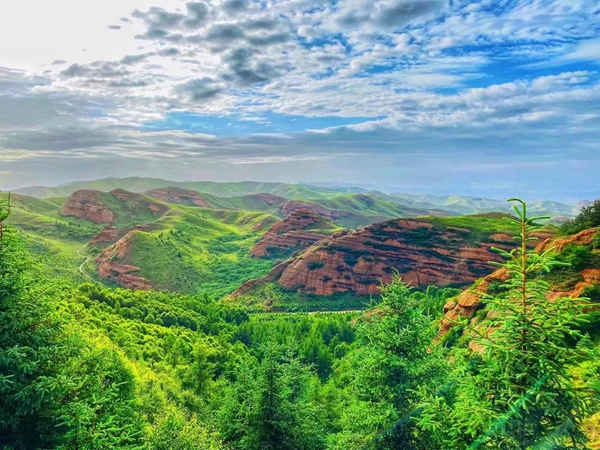
The Huoshizhai National Geological Park. [Photo provided to chinadaily.com.cn]
Guyuan, a city in southern Ningxia hui autonomous region, sits on the western edge of the Loess Plateau, with the Liupan Mountains stretching bordering it to the north and south.
As a major birthplace of Chinese civilization, Guyuan has served as a crucial frontier stronghold in Northwest China since the Shang and Zhou dynasties (c.16th century-256 BC) and was a vital passage along the ancient Silk Road.
The region boasts a diverse cultural heritage, where Silk Road culture, nomadic traditions, and agricultural practices converge and blend harmoniously.
Guyuan prioritized green development. The Liupan Mountains within its territory are revered as the "Green Island of the Plateau" and "Natural Water Tower", offering fresh, cool air and breathtaking landscapes. The Qingshui River National Wetland Park serves as an important habitat for migratory birds, while the Huoshizhai National Geological Park showcases northern China's iconic Danxia landforms.
Guyuan serves as a vital green agricultural production base in western China and one of the primary vegetable suppliers for the Guangdong-Hong Kong-Macao Greater Bay Area. Its premium products, including Guyuan yellow beef, native honey, and flaxseed oil, have obtained China's National Geographical Indication certification. The region has earned prestigious titles as China's "Hometown of Cool-climate Vegetables", "Hometown of Potato Seed Tubers", and "Hometown of Liupan Mountain Yellow Cattle".
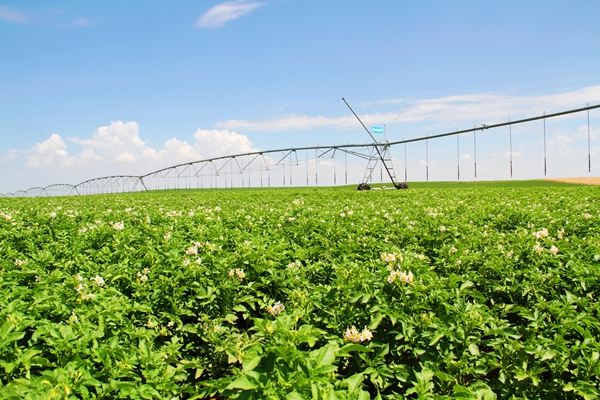
The potato cultivation base in Guyuan. [Photo provided to chinadaily.com.cn]