Main piers in Danube completed as scheduled


Despite challenges from flooding, harsh cold and a tight schedule, the main piers of the Danube Bridge have been completed on time.
Li Bing, the project's chief commander, spearheaded resource coordination to ensure the project's seamless progress, while the technical team, led by Guo Shifeng, overcame various technical challenges.
The project starts from "Europe Avenue" in the north, spans the Danube River, and connects to National Highway 119 in the south, linking with the Novi Sad to Ruma expressway. The main bridge over the Danube River, which is 880 meters in length, was designed as a three-tower extradosed cable-stayed bridge with a prestressed concrete continuous box girder structure.
The main piers were installed 10 meters underwater, making the construction of the pile foundation and cap challenging. The project team set the steel trestle bridge deck at a standard height of 78 meters – the highest Danube River water level in the past 12 years – to ensure subsequent procedures would not be affected by flooding.
They used rotary drilling and slurry wall protection techniques to advance the pile foundation construction, while the bearing platform was built under the protection of a steel sheet pile cofferdam.
With the flood season approaching, constructions above and below water advanced in synchronization, with real-time water level monitoring. The MP3 section of the main pier's pile foundations and reinforcement cages required a 100 percent pass rate, setting a high construction standard. Guo’s team optimized the process, reducing the time for placing reinforcement cages from 20 hours to five, thus shortening the construction period without compromising quality. Li ensured that technical optimizations translate into productivity.
The geological conditions at the MP4 section of the main pier consisted of clay, with high resistance to steel sheet pile insertion, high risk, and low efficiency during underwater excavation. To address these challenges, Li implemented an auger drilling technique combined with waterjet hole piloting to improve efficiency. Meanwhile, while Guo’s team conducted repeated nighttime tests to optimize process parameters. The project team also applied the "dry bottom sealing" technique for the first time, enabling rapid and safe excavation of the cofferdam base.
The lower structure of the main pier was completed on Dec 15, 2024, allowing more time for the construction of upper structure and establishing a "Chinese standard" model for bridge construction in Serbia.
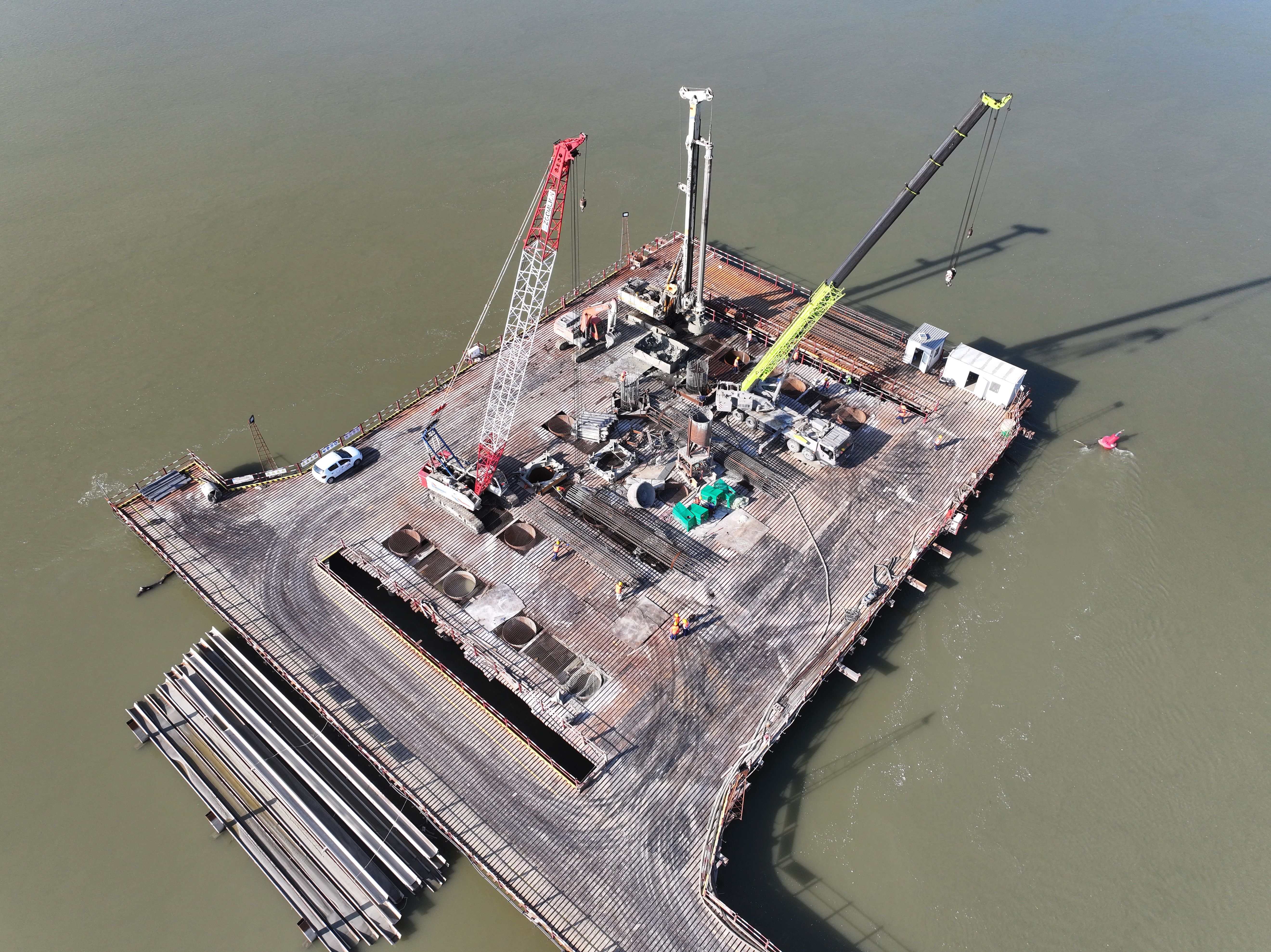
The main piers of the Danube Bridge. [Photo provided to chinadaily.com.cn]
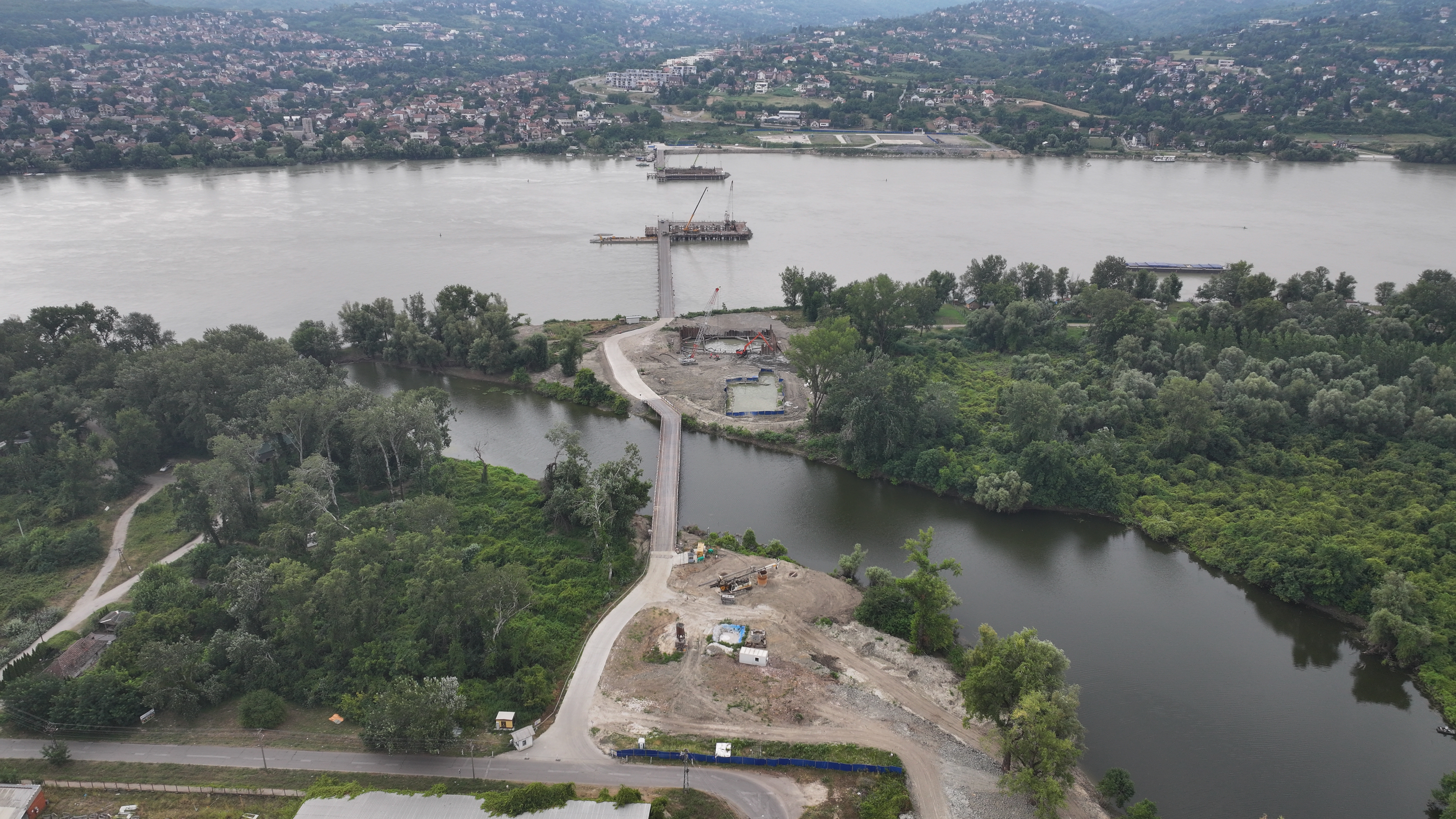
The Danube Bridge. [Photo provided to chinadaily.com.cn]