
New medical insurance policy benefits Nanyang residents
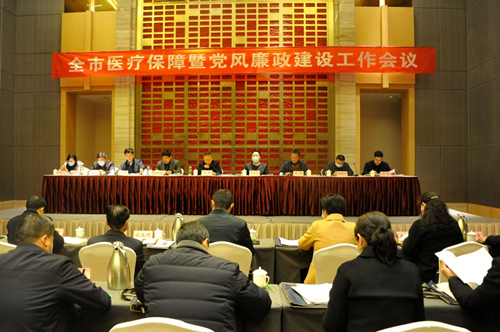
The Nanyang Medical Security and Party Conduct and Clean Government Construction Work Conference is held on March 10. [Photo/01ny.cn]
In 2020, Nanyang's medical insurance work achieved gratifying results: the number of insured employees in the city reached 792,600, the number of urban and rural residents insured reached 8,422,600, and the registered poor households achieved a 100-percent insurance rate. Also, urban and rural residents' medical insurance fund income was 6.67 billion yuan.
The increase in the medical insurance fund's income has given support to the improvement of the basic medical insurance benefits of residents. A total of 51,620 people were settled for medical treatment in different places in the province, and 19,680 people were paid for medical treatment in various locations across provinces, of which 5,647 people received direct settlements across provincial lines, which greatly facilitated the people's medical reimbursement.
In 2021, the city's medical security system will pay close attention to refined medical insurance management. Before June 30, it will fully implement basic medical insurance and maternity insurance.
Nanyang's medical insurance system has deepened the bidding procurement and medical price reforms. Also, the pilot work of centralized procurement of municipal medicines and medical consumables shall be continuously promoted.
Based on the medical insurance fund's total budget management, the city's medical insurance system has comprehensively carried out the reform of the payment method by disease type (DIP), actively selected disease types for the payment scheme, and gradually expanded the scope of payment by disease type. Nanyang has also guided designated medical institutions to switch from passive fee control to active fee control, which reduces the financial burden of medical treatment for patients.
In addition, the total number of medical insurance electronic vouchers activated at the end of June accounted for 50 percent of the city’s total, and the access rate at the two designated institutions reached 100 percent. The activation before the end of the year will achieve total coverage, and the electronic vouchers' scan code settlement rate will reach more than 50 percent.