



 Ordos Impression
 Ordos WeChat
 Ordos Reported
Ordos leads green energy transition with innovation
Updated: 2025-06-24 (chinadaily.com.cn)  Print
Print 


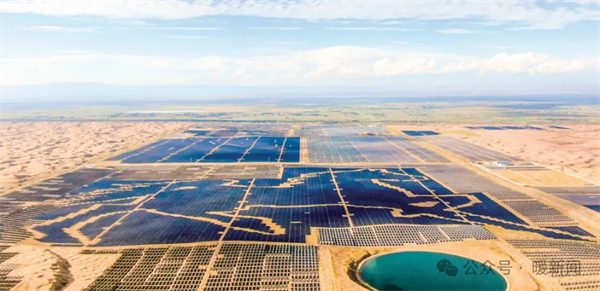
The horse-shaped power station in Kubuqi Desert. [Photo/Nuan News]
Ordos, a traditional energy hub in North China's Inner Mongolia autonomous region, is undergoing a transformative shift toward green development. Once synonymous with coal, the city is now becoming a national model for sustainable energy reform.
With over 250 billion metric tons of coal reserves – one-sixth of the national total – Ordos plays a vital role in powering China, producing more than 2 million tons of coal daily for 25 provinces. But Ordos is no longer just the "coal capital" of China; it is now pioneering the construction of a world-class modern energy industry spanning coal, renewables, hydrogen, and energy storage.
High-tech mining: From sweat to smart
At the Heidaigou open-pit coal mine, fleets of 300-ton unmanned trucks work in coordination with remote-controlled bulldozers and hydraulic shovels, showcasing Ordos' push toward fully automated mining. As a pilot area for smart mining in China, the site uses 5G networks and AI to boost safety, efficiency, and resource utilization.
Ordos leads Inner Mongolia's smart mining push, with 148 of the region's 209 intelligent coal mines located within the city – accounting for two-thirds of Inner Mongolia's intelligent coal production, totaling 700 million tons annually.
Deep processing for higher value
In addition to mining, Ordos is advancing the coal-to-chemicals sector. In Uxin Banner, the world's largest single-site coal-to-olefin project is fully operational, transforming coal into high-value polyolefin products. The 67.3 billion yuan ($9.35 billion) project cuts energy use by 15 percent compared to traditional processes and anchors Ordos' ambitions to build a globally competitive modern coal chemical cluster.
By 2024, the Yulin-Ordos-Ningdong cluster had entered the ranks of China's national advanced manufacturing zones, creating a vertically integrated coal value chain from smart extraction to high-end conversion.
Renewable energy boom
Ordos is now a rising star in China's clean energy revolution. In the zero-carbon industrial park in Mengsu Economic Zone, hydrogen-powered heavy trucks – charged in just 8 minutes and emitting only water – highlight the city's "wind-solar-hydrogen-storage-transport" ecosystem. The park uses 80 percent locally sourced green electricity, with the rest from grid-traded clean power.
In 2024, the park's new energy output exceeded 20 billion yuan, with exports up 63 percent year-on-year, reaching 3.9 billion yuan. Ordos is transitioning from isolated pilot projects to full-fledged industrial clusters.
One iconic site is the Guinness World Record-certified "Horse-shaped Solar Station" in Dalad Banner, comprising 196,000 solar panels. The project generates 900 million kWh annually and boosts desert vegetation cover from 5 percent to 80 percent through a model combining power generation, ecological restoration, and sustainable grazing.
Other major projects highlight the "Photovoltaic Great Wall" in the Kubuqi Desert, greening over 1 million mu (666,667 hectares) and producing billions of kWh of green electricity.
Ordos' success stems from its natural advantages. With 3,000 annual sunshine hours and vast wind resources, its technical renewable capacity stands at 140 GW – equivalent to six Three Gorges Dams. In 2024, Ordos added 10 GW of new renewable capacity, bringing its total to 21.24 GW – one-sixth of Inner Mongolia's total.
From scale to smart: Building innovation clusters
In 2024, Ordos' new energy equipment manufacturing sector grew 261.3 percent, contributing 2.2 percentage points to the city's industrial growth. As the industry shifts from pilot zones to large-scale clusters, innovation and talent have become crucial.
At the Ordos Electric Metallurgy Group's tech center, the world's first mercury-free PVC production line using the calcium carbide method is operating steadily. This 500 million yuan, seven-year project has ended reliance on imported technologies, improved purity to 99.99 percent, and eliminated 120 tons of mercury emissions annually.
Supporting these breakthroughs are 18 high-level innovation platforms, including the Ordos Carbon Neutrality Research Institute and Peking University's Ordos Energy Institute. These centers bridge traditional energy tech and emerging green industries, fostering a cycle of innovation, application, and commercialization.
Talent fuels transformation
Ordos backs its innovation push with a robust talent strategy. From talent policies and innovation hubs in Beijing and Shenzhen to the "Ordos Cup" global innovation competition, the city is attracting top minds. Its vocational institutes train over 5,000 skilled professionals annually in hydrogen and energy storage, ensuring a tight match between talent and industry needs.
PhD teams from Tsinghua University are commercializing hydrogen fuel cell technologies, while local graduates operate underground intelligent robots – an embodiment of the synergy between academia and industry.
A global green energy model
From "coal-dominated" to "wind-solar-hydrogen-storage-transport" synergy, Ordos has redefined itself through green innovation. It proves that traditional energy bases can lead in the low-carbon transition and emerge as global examples of sustainable development.
Ordos' journey is more than a local transformation – it's a bold answer to global energy challenges, powered by innovation, driven by talent, and guided by green ambition.

