
- Home
- Media Center
-
Events
- Wuzhen Summit
- Regional Forums
- Practice Cases of Jointly Building a Community with a Shared Future in Cyberspace
- World Internet Conference Awards for Pioneering Science and Technology
- The Light of Internet Expo
- Straight to Wuzhen Competition
- Global Youth Leadership Program
- WIC Distinguished Contribution Award
- Membership
- Research & Cooperation
- Digital Academy
-
Reports
- Collection of cases on Jointly Building a Community with a Shared Future in Cyberspace
- Collection of Shortlisted Achievements of World Internet Conference Awards for Pioneering Science and Technology
- Reports on Artificial Intelligence
- Reports on Cross—Border E—Commerce
- Reports on Data
- Outcomes of Think Tank Cooperation Program
- Series on Sovereignty in Cyberspace Theory and Practice
- Other Achievements
- About WIC
- 中文 | EN


WIC’s 2025 journey highlights future of digital age


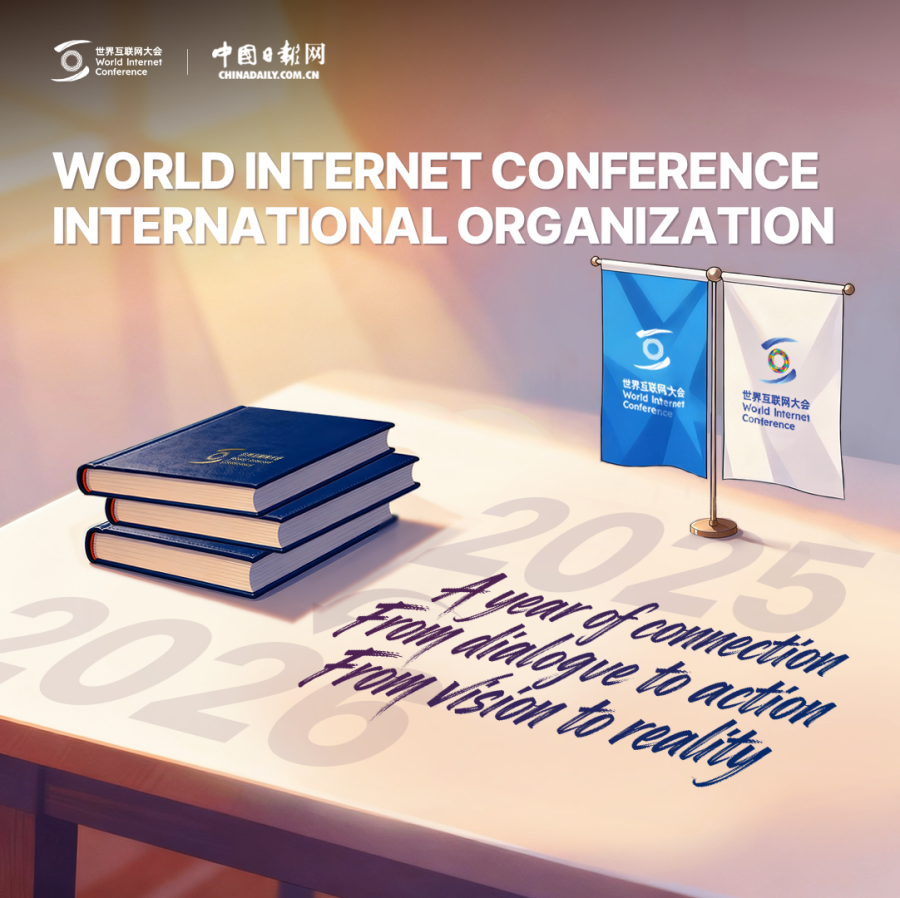
The year 2025 witnessed the World Internet Conference or the WIC continuing its journey as a high-end dialogue platform dedicated to fostering a better global internet community.
Guided for the 10th year by the vision of Building a Community with a Shared Future in Cyberspace, the WIC captured moments of transformation — as innovations moved from laboratories into real-world applications and global consensus increasingly took practical shape.
A set of interconnected keywords defined the WIC throughout the year, including AI for Sustainability (AI4S), AI for Humanity (AI4H), cross-border e-commerce, the Digital Silk Road, computing power development and cultural heritage digitalization.
Together, these themes highlighted the WIC’s focus on aligning technological innovation with economic development, social responsibility and cultural continuity.
The footprint of WIC in 2025 extended from the Asia-Pacific Summit in Hong Kong to the Digital Silk Road Development Forum in Quanzhou, East China's Fujian province, the Cultural Heritage Digitalization Forum in Xi’an, Northwest China’s Shaanxi province and the Wuzhen Summit in East China’s Zhejiang province. This trajectory underscored how digital innovation is closely linked to economic connectivity, cultural continuity and global cooperation.
At the WIC Asia-Pacific Summit held in Hong Kong in April, AI stood at the center of discussions. The summit reflected a shared recognition that AI development must be accompanied by appropriate governance, ethical guidelines and inclusiveness, particularly in a region marked by diverse levels of digital development.
In July, attention turned to Quanzhou, where the WIC Digital Silk Road Development Forum explored the evolving meaning of connectivity in the digital era.
The forum emphasized that digital connectivity has extended beyond physical infrastructure to cover trade cooperation, technological empowerment and sustainable development, reshaping traditional pathways of cooperation through digital technologies.
As technological progress accelerated, the WIC also emphasized what must be preserved. The WIC Cultural Heritage Digitalization Forum, held in Xi’an in September, focused on how digital tools can serve as bridges between past and future.
Participants explored how innovation and collaboration can enhance the protection, revitalization and sharing of cultural heritage, ensuring that technological advancement supports rather than diminishes cultural diversity.
The discussions of the year came to a conclusion in November at the 2025 WIC Wuzhen Summit. Through more than 20 forums and related activities, the summit provided a comprehensive platform for exploring pathways toward an open, cooperative, secure and inclusive digital future.
It also reflected both the diversity of perspectives within the global digital community and the growing consensus on the need for collaborative approaches to emerging challenges.
The significance of the WIC in the age of AI was further underscored by voices from the global community. Nii Narku Quaynor, known as the “father of the internet in Africa” and chairman of Network Computer Systems Ltd in Ghana, noted that the WIC provides important opportunities for technical cooperation in global AI security and governance.
In addition, Lacina Kone, director-general and CEO of Smart Africa and the recipient of the 2025 WIC Distinguished Contribution Award, expressed hope that the conference would continue serving as a bridge linking digital forces across regions, while promoting policy dialogues, technological exchanges and cooperation on AI ethics.
As AI advances at an unprecedented pace, the WIC is increasingly acting as an “incubator” for global governance and policy development, contributing to efforts aimed at addressing global digital divides and governance gaps, said Francis Gurry, vice chair of the WIC.
Although the chapter for 2025 has closed, the journey of the WIC is far from over. In 2026, the WIC will continue to leverage its strengths as an international organization, stay true to its founding mission, uphold its international responsibilities and further deepen exchanges and cooperation in cyberspace — so as to contribute to the development of a peaceful, secure, open, cooperative and orderly cyberspace.
The World Internet Conference (WIC) was established as an international organization on July 12, 2022, headquartered in Beijing, China. It was jointly initiated by Global System for Mobile Communication Association (GSMA), National Computer Network Emergency Response Technical Team/Coordination Center of China (CNCERT), China Internet Network Information Center (CNNIC), Alibaba Group, Tencent, and Zhijiang Lab.