
- Home
- Media Center
-
Events
- Wuzhen Summit
- Regional Forums
- Practice Cases of Jointly Building a Community with a Shared Future in Cyberspace
- World Internet Conference Awards for Pioneering Science and Technology
- The Light of Internet Expo
- Straight to Wuzhen Competition
- Global Youth Leadership Program
- WIC Distinguished Contribution Award
- Membership
- Research & Cooperation
- Digital Academy
-
Reports
- Collection of cases on Jointly Building a Community with a Shared Future in Cyberspace
- Collection of Shortlisted Achievements of World Internet Conference Awards for Pioneering Science and Technology
- Reports on Artificial Intelligence
- Reports on Cross—Border E—Commerce
- Reports on Data
- Outcomes of Think Tank Cooperation Program
- Series on Sovereignty in Cyberspace Theory and Practice
- Other Achievements
- About WIC
- 中文 | EN


Highlights of 2025 WIC: Wuzhen Summit forges inclusive, intelligent digital future


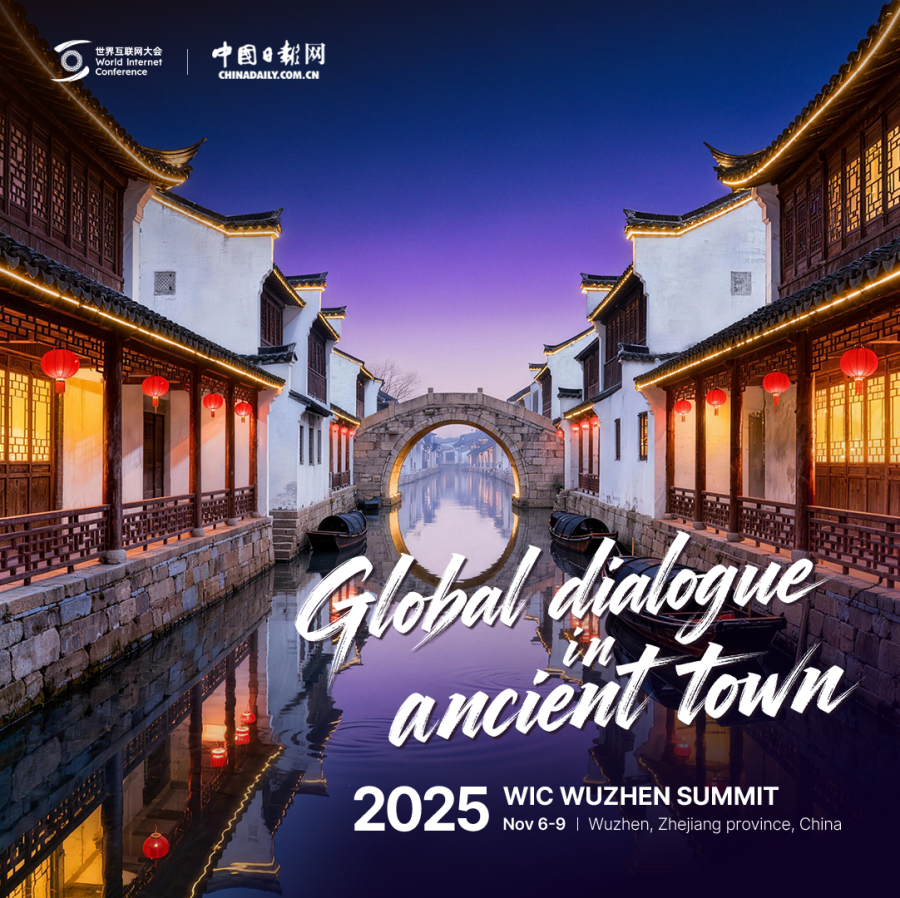
The 2025 World Internet Conference (WIC) Wuzhen Summit was widely said to have carried special significance, as it marked the 10th anniversary of the vision of building a community with a shared future in cyberspace.
That meant it served both as a moment of reflection on a decade of dialogue and as a platform for shaping the very future of the global digital landscape.
Over the past decade, the WIC Wuzhen Summit has evolved into a comprehensive platform for international exchanges and cooperation on internet development and global digital governance.
In 2025, against the backdrop of the rapid advancement of artificial intelligence (AI), discussions focused on development and security — highlighting the need to advance innovation while strengthening governance, ethics and inclusiveness.
Building on exchanges held throughout the year, the WIC Wuzhen Summit brought together insights accumulated across regions and sectors. Discussions covered a wide range of topics — including AI governance, digital economy development, cross-border e-commerce, computing power infrastructure, data connectivity and digital cultural preservation.
Across more than 20 forums and related activities, participants explored pathways towards an open, cooperative, secure and inclusive digital future.
The summit reflected a growing consensus that digital transformation should be guided by dialogue, shared rules and practical cooperation, in order to better address common challenges and bridge digital divides.
Innovation also took center stage. The WIC honored pioneering projects in such frontier fields as large AI models, the intelligent Internet of Things, embodied intelligence and quantum computing, highlighting the growing role of open innovation in shaping the digital future.
Over the past decade, the WIC Wuzhen Summit has borne witness to the town's rise, finishing a transformation that mirrors China's broader digital evolution. Currently, Wuzhen is not merely a backdrop for international conferences, it’s a living model of how digital innovation can revitalize traditional economies and empower local communities.
The discussions of the WIC Wuzhen Summit in the now-passed 2025 showed how ideas on digital governance are increasingly being translated into mechanisms, cooperation frameworks and policy coordination, underscoring the transition from vision to action.
Kostas Nikou, executive director of the University of Western Macedonia in Greece, noted that the highest power of digital protection lies in creative inheritance — underscoring the critical link between strategic policy, economic development and cultural memory, and calling for international exchanges and cooperation to advance this digital transformation.
Sean Stein, president of the US-China Business Council, described his idea of the digital age in a vivid way. He said that new technologies were becoming more powerful, like coursing rivers that required both bridges and boats to properly navigate, leverage and understand, while people from different countries acted as navigators on these shared waters.
Additionally, bringing together outstanding young innovators from around the world, the 2025 WIC Global Youth Leadership Program highlights the growing role of youth in addressing global digital challenges.
Spanning fields from AI and cybersecurity to digital inclusion, education and governance, the selected young leaders demonstrate how technology can be harnessed for social good through concrete action.
Their participation at the Youth and Digital Future Forum during the 2025 WIC Wuzhen Summit underscores the belief that building an open, inclusive and sustainable digital future depends not only on technological progress, but also on the creativity, responsibility and global vision of the younger generation.
Alongside the summit, the Light of Internet Expo showcased just how AI is transforming industries and daily life, while turning Wuzhen itself into a living example of how digital technologies can revitalize traditional communities.
Bringing together these government officials, representatives of international organizations, industry leaders, scholars and experts from around the world, the summit highlighted the richness of global digital perspectives and underscored a shared commitment to cooperation as the world moves towards a more open, inclusive and interconnected cyberspace.
As the final major stop on the WIC’s 2025 journey, the Wuzhen Summit reaffirmed a central message echoed throughout the year: Only through openness, cooperation and shared governance can the promise of digital intelligence be fully realized, leaving no one behind.
The World Internet Conference (WIC) was established as an international organization on July 12, 2022, headquartered in Beijing, China. It was jointly initiated by Global System for Mobile Communication Association (GSMA), National Computer Network Emergency Response Technical Team/Coordination Center of China (CNCERT), China Internet Network Information Center (CNNIC), Alibaba Group, Tencent, and Zhijiang Lab.