
- Home
- Media Center
-
Events
- Wuzhen Summit
- Regional Forums
- Practice Cases of Jointly Building a Community with a Shared Future in Cyberspace
- World Internet Conference Awards for Pioneering Science and Technology
- The Light of Internet Expo
- Straight to Wuzhen Competition
- Global Youth Leadership Program
- WIC Distinguished Contribution Award
- Membership
- Research & Cooperation
- Digital Academy
-
Reports
- Collection of cases on Jointly Building a Community with a Shared Future in Cyberspace
- Collection of Shortlisted Achievements of World Internet Conference Awards for Pioneering Science and Technology
- Reports on Artificial Intelligence
- Reports on Cross—Border E—Commerce
- Reports on Data
- Outcomes of Think Tank Cooperation Program
- Series on Sovereignty in Cyberspace Theory and Practice
- Other Achievements
- About WIC
- 中文 | EN


Saving heritage with smart tech


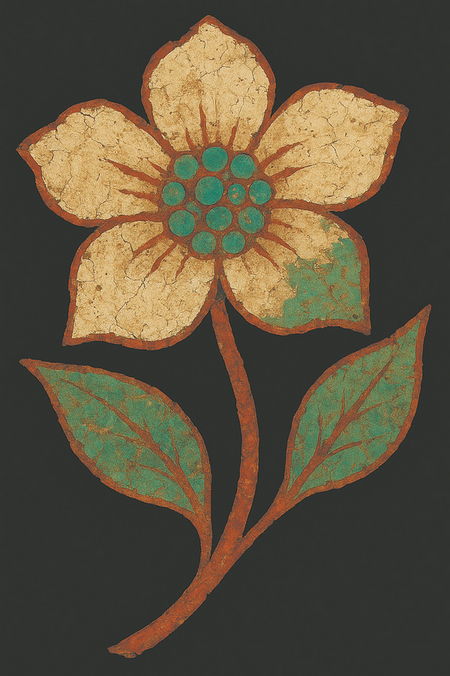
The motifs created by Zhao Haiying's team are derived from the murals in the Xinjiang Uygur autonomous region. [Photo/China Daily]
Her inspiration came through carpets, studying motifs from her hometown, the Xinjiang Uygur autonomous region, to Azerbaijan, seeing how one art form connects countries and regions involved in the Belt and Road Initiative.
"It confirmed that the gene is the essential unit for quantifying, calculating, and, crucially, for revealing patterns of evolution through time and space," she says.
Zhao's team has since defined six core categories of cultural genes: patterns, colors, music, dance, crafts and forms. In their database, a dragon motif from a Ming Dynasty (1368-1644) robe isn't just an image in a museum; it's a data node linked to its mathematical structure, related architectural forms and modern design applications.
The practical work is vast and formidable. Partnering with 54 museums, including the Palace Museum in Beijing and the Shanghai Museum, Zhao's lab has interconnected more than 1.3 million digital artifacts and patterns, using AI to analyze and tag items with deep, contextual labels.
They've cataloged more than 90,000 dragon patterns and about 7,740 phoenix patterns from the Palace Museum's collections — conducting large-scale analyses that had never been undertaken.
The World Internet Conference (WIC) was established as an international organization on July 12, 2022, headquartered in Beijing, China. It was jointly initiated by Global System for Mobile Communication Association (GSMA), National Computer Network Emergency Response Technical Team/Coordination Center of China (CNCERT), China Internet Network Information Center (CNNIC), Alibaba Group, Tencent, and Zhijiang Lab.