Fengxian coastal wetland welcomes winter migratory birds



Migratory birds. [Photo/WeChat ID: fengxian310226]
Every autumn and winter, the coastal wetlands in Shanghai's Fengxian district become a key stopover for migratory birds heading south. With the arrival of cold fronts, flocks of winter birds are now gathering near Bihai Jinsha Beach, bringing vitality to the coastline.
At Bihai Jinsha Beach's vast mudflats and windbreak forests, shorebirds, ducks, and geese are already appearing in large numbers, foraging for clams and small fish along the mudflats or flying gracefully across the glistening waters.
Professor Gao Shuhong, a volunteer bird monitor from the Shanghai bird watching association, said Fengxian district's coastal wetlands are an essential rest stop on the East Asia-Australasia Flyway, providing crucial refueling for migratory birds. However, this year's warmer climate has delayed their migration by about two weeks.
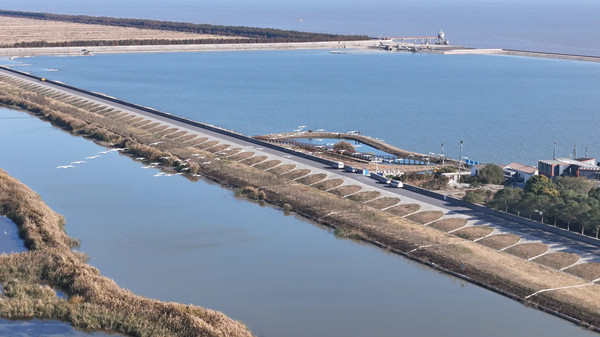
Coastal wetlands in Fengxian district. [Photo/WeChat ID: fengxian310226]
As of early December, approximately 4,800 migratory birds from 50 species have been observed, well below the usual peak of around 13,000. Gao expects the numbers to rise as temperatures drop, with the peak observation period anticipated between late December and February.
While this year's migration is delayed, the variety of species remains consistent with previous years. Rare birds such as the black-necked grebe and long-billed plover have been spotted, alongside common species like the white spoonbill and northern pintail, drawing birdwatchers. Visitors are reminded to maintain a respectful distance to ensure a peaceful environment for the birds.