
Hohhot's high-quality development


During the 14th Five-Year Plan (2021-25) period, Hohhot has adhered to its strategic positioning and achieved high-quality development, ranking among China's Top 100 Cities in 2021 and rising to 82nd place by 2024. The city's average annual growth rate of fixed asset investment reached 17.2 percent, and its permanent population increased to 3.64 million, with urbanization exceeding 80 percent.
In 2024, with the establishment of the National Center of Technology Innovation for Dairy, the total revenue of Hohhot's dairy industry chain exceeded 256 billion yuan ($36.21 billion), with Inner Mongolia Yili Industrial Group Co and China Mengniu Dairy Co ranking fifth and tenth globally in the dairy industry.
By 2025, Hohhot has developed a complete industrial chain for photovoltaic silicon materials. Its annual production capacities of electronic-grade silicon and polycrystalline silicon now account for 30 percent and 60 percent of the national total, respectively.
The city ranked among the Top 100 Cities in Digital Economy for two consecutive years, made it into the Top 20 Chinese Cities In Computing Power, earned titles such as China's Cloud Valley, and ranked 26th among China's Top 100 Data Element Cities. It is also now home to over 600 national high-tech enterprises and 852 national technology-based small and medium-sized enterprises.
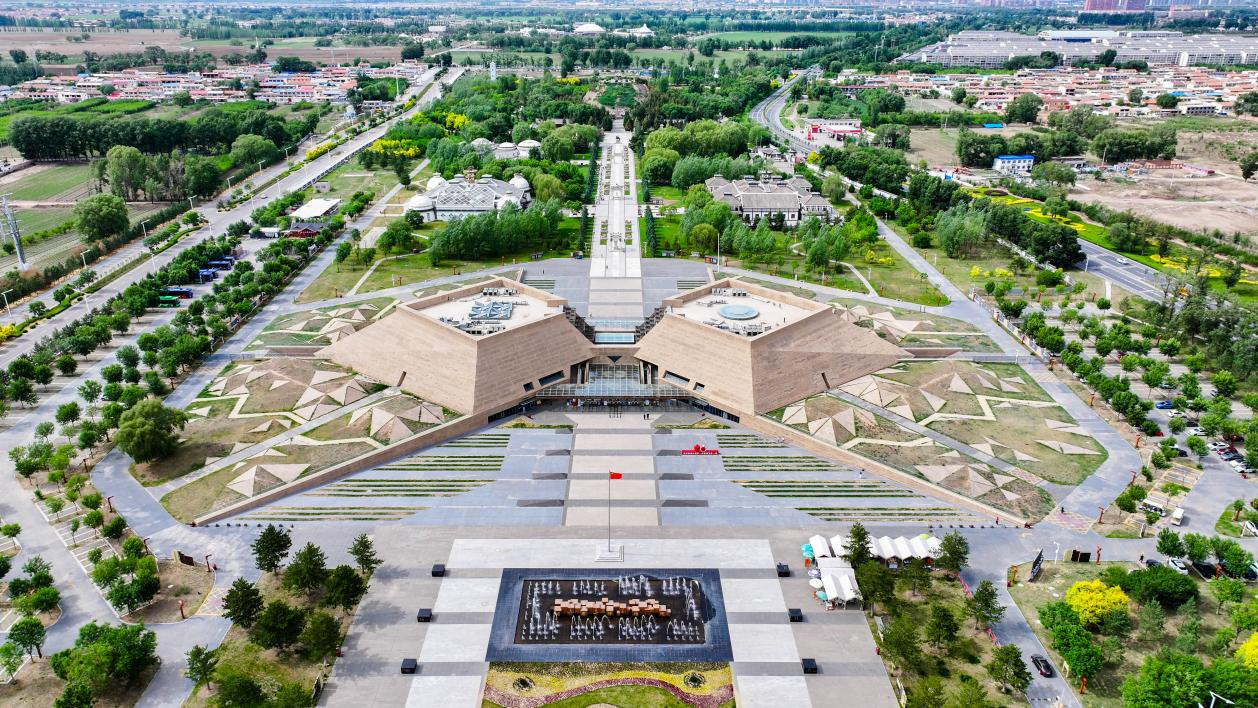
Hohhot's Zhaojun Museum. [Photo/Hohhot Convergence Media]
Hohhot established a green energy system, forming a "1+2+N" new energy industry ecosystem alliance and a green power certificate trading service organization, pioneering Green Electricity Certificate trading services. It has also built the world's largest intelligent manufacturing base for foot-and-mouth disease vaccines, as well as production bases for xanthan gum and avermectin, supplying 39.55 percent of domestic foot-and-mouth disease vaccines, 75 percent of global coenzyme Q10, and 60 percent of global chlortetracycline premix.
The Hohhot Low-Altitude Economy Demonstration Zone has begun operations, with the city setting up three centers focused on satellite operation data, applications, and settlements. It has also been approved as one of the first cities for large-scale Beidou application pilots in the industrial and information sectors.
The city has brought in 43 academicians from the Chinese Academy of Sciences and the Chinese Academy of Engineering, and its Mengkeju platform has attracted 12,000 users and 5,929 innovative entities.
Clean heating has been almost fully implemented across urban areas, county towns, and rural plains in Hohhot, with the proportion of days with good air quality reaching 87.7 percent. As a demonstration city for the national "sponge city" initiative, urban sewage treatment rates now exceed 96 percent. The sixth phase of the "Three-North Shelterbelt Forest Program", covering 2.28 million mu (152,000 hectares), was completed six years ahead of schedule and has been at the forefront of establishing headquarters for energy resources and demonstration zones for green power consumption.
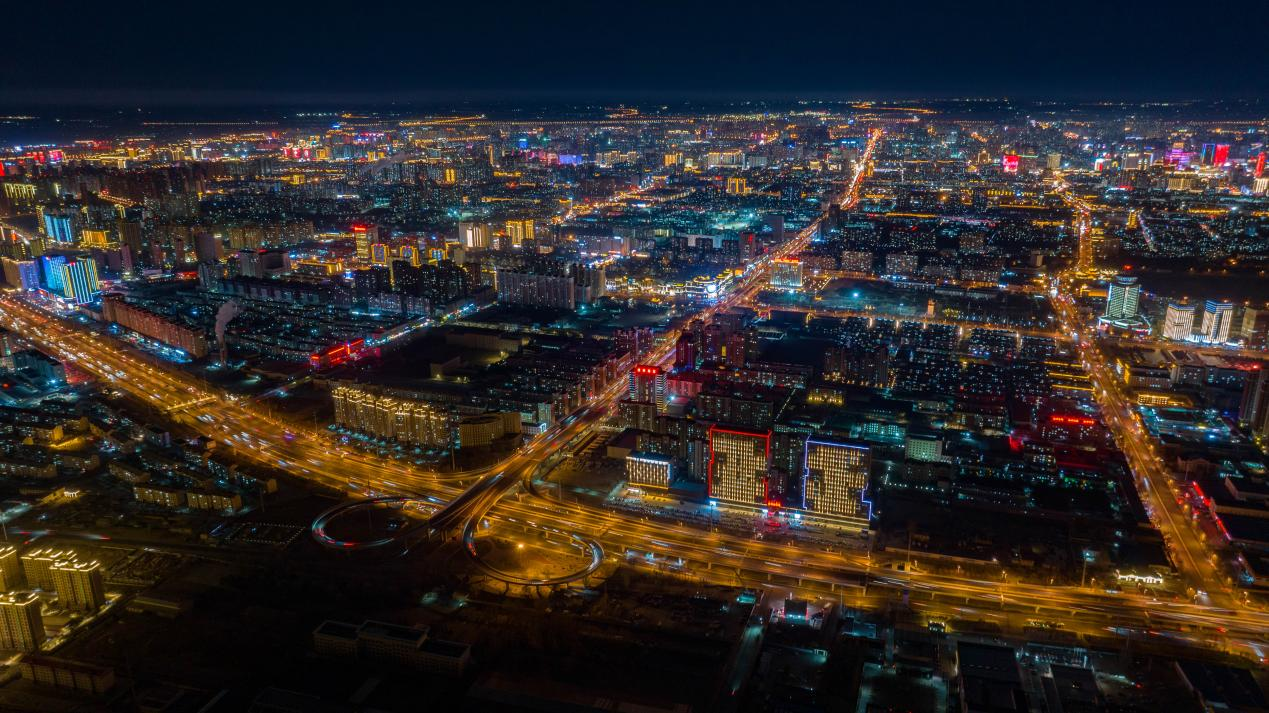
Hohhot's night view. [Photo/Hohhot Convergence Media]
Over 139,000 university graduates have found employment or started businesses in the city, comprehensive elderly care services have been achieved, and all municipal hospitals have been rated as grade A tertiary hospitals.
Hohhot's culture and tourism have also been elevated, with the city meticulously launching brands such as "16 Views of Qingcheng". As well as co-founding the Hohhot Philharmonic Orchestra with Inner Mongolia Art Theatre, the city also established the Hohhot Sculpture Museum and the Hohhot International Sculpture Park in collaboration with the Chinese Urban Sculpture Artists Association.