
Hohhot strengthens virus control measures during travel rush


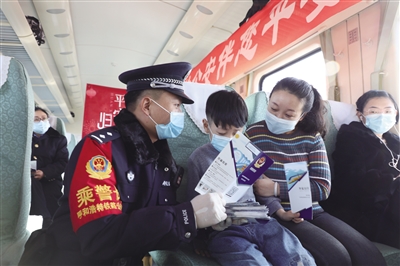
A railway policeman gives safety information to passengers. [Photo/Hohhot Daily]
Hohhot, capital city of North China's Inner Mongolia autonomous region, has implemented strict COVID-19 prevention and control measures during this year's Spring Festival travel rush, ensuring passengers' safety and making the process run smoothly, according to local media reports.
The Spring Festival travel rush, known as chunyun, is an annual travel rush in China that coincides with Spring Festival, the Chinese New Year holiday. This year's peak travel period started on Jan 28 and will last for roughly 40 days, coming to an end on March 8.
There is a strong uncertainty in the passenger flow during this year's travel period. It was initially estimated that there will be 7,200 inbound and outbound flights at Hohhot Baita International Airport during the period, serving 600,000 to 700,000 passengers.
During the travel period, passengers are still required to wear a mask and have body temperature measurements at Hohhot Baita International Airport.
The terminals are ventilated four times a day, and the windows will be opened for 20 minutes after the night flights end.
Information signs on matters such as health codes, Hohhot epidemic prevention policies, and notifications of medium- and high-risk areas have been placed at the boarding exit, and the details of incoming passengers will be checked.
In addition, to provide more convenience for the elderly, a special passage has been set up, serving elderly people who have difficulties using smart phones. The operating windows of ticketing, catering, and shopping in the terminal building retain manual services, and support multiple payment methods such as cash, credit cards, and online payment.
In order to facilitate passengers' travel, Hohhot Coach Terminal offers online ticket purchase services, as well as ticket purchasing via mobile phones.
Also, the station will comprehensively check passengers’ information to ensure that every passenger's movements can be traced.